


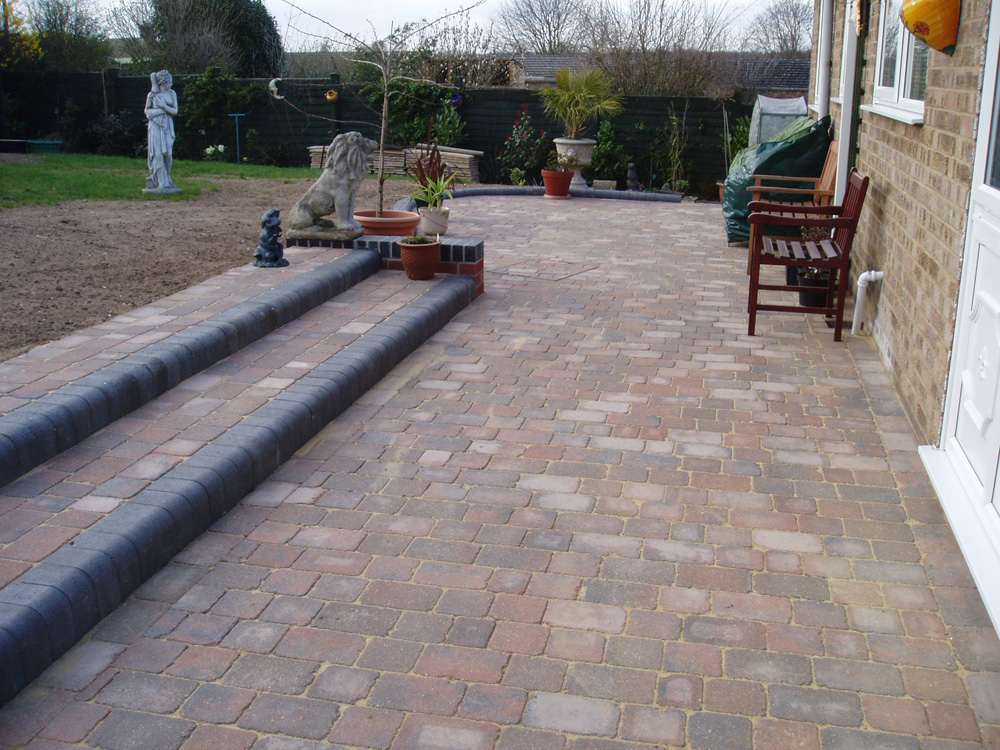
04 Aug Garden Patios and foundation laying, TJM Groundworks Suffolk, Norfolk
A lot of pavers look good when they first go in. But when an installer doesn’t really know what he is doing, the ill effects will show within a year. After you’ve gone through the winter and had time for settling, that’s when you start to see problems,” explained Burke. “It might be frost heaving, settling or problems caused by difficult site conditions, like clay soil.”
Frost heaving – a situation in which moisture in the ground below the pavers freezes, expands and causes the soil around it to bulge – results in paver bricks pushing up out of place. It’s not only an eye-sore, but a potential tripping hazard. Avoiding this and other problems starts with the base
In fact, an Engineer and Landscape Designer whose goal in attending was to “learn the proper installation techniques” ended up leaving with much more: an appreciation for estimating – very comprehensive. Attendees especially appreciated learning about paver cost estimating from someone like Burke, who has been there before. His goal is to teach students how to avoid the mistakes he made. One way he does this is by sharing a portfolio of his paver jobs and telling students what he charged for each one. He explains how he determined the price – from estimating material costs and labor to adding in his overhead costs and mark-ups.
When it comes to selling paver installation services, Burke warns class participants to be careful about answering the question homeowners most commonly ask first: What do you charge per square foot? Every job is different. Not only do you need to know your own numbers and your crew’s productivity, but you have to be familiar with the local site conditions before you can give an estimate.
The cost to install a 200 square foot square patio in a front yard with easy access is different than a 200 square foot circular patio in a backyard that you can only access via small gate,” Burke explained. “You can use a machine to dig one but the other requires hand digging and lots of cuts. Another big variable is the paver chosen by the homeowner; paver costs vary widely.
Every book you read, internet article, friend, etc. will tell you something different. Run down to your local landscaping, stone, masonry dealer and ask them if they install patios. If they do, ask them what they recommend for stone patio sub-slab foundation depths and materials. There’s no set answer to this, as every region has it’s own climate and thus it’s own physical abuse the patio must endure.